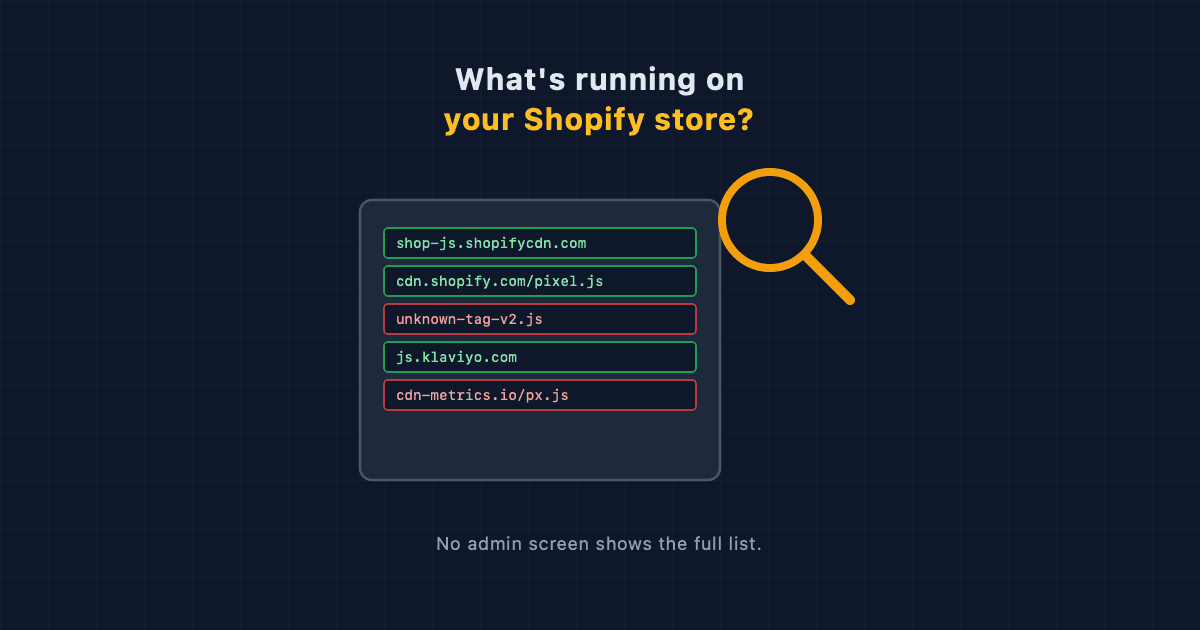
A New Script Appeared on Your Store. Would You Know?
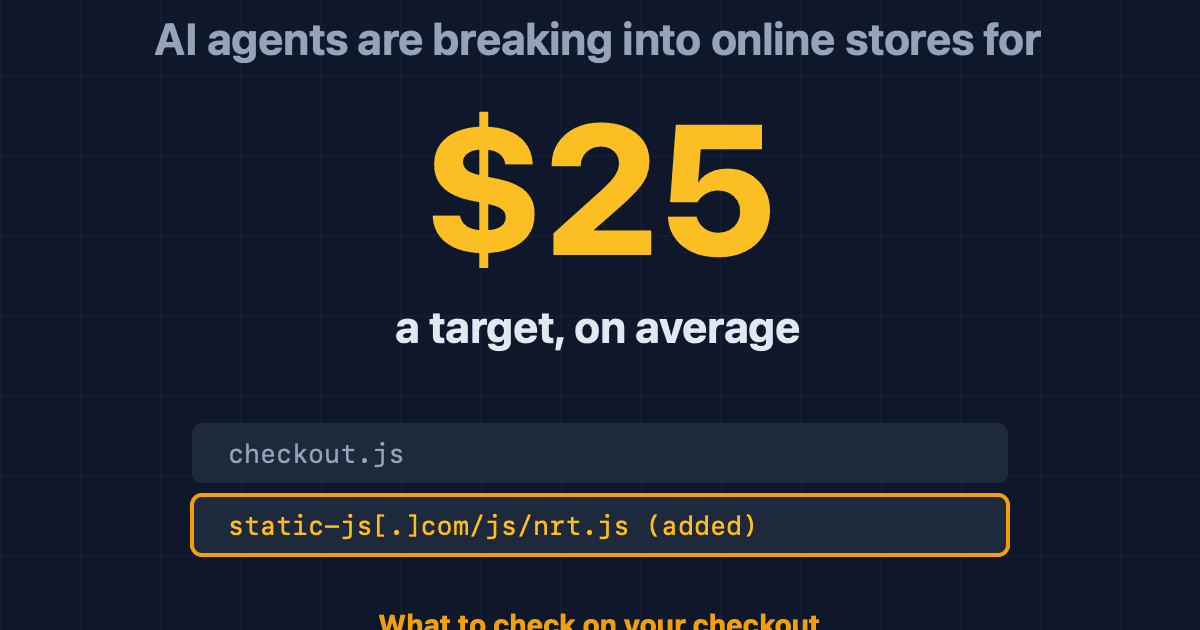
Third-party scripts arrive on ecommerce stores through app updates, theme edits and agency deploys, with no alert. What drift is, how to detect website changes, and what matters.
PCI compliance guides, Magecart threat intelligence, and practical security advice for ecommerce merchants.
Third-party scripts arrive on ecommerce stores through app updates, theme edits and agency deploys, with no alert. What drift is, how to detect website changes, and what matters.
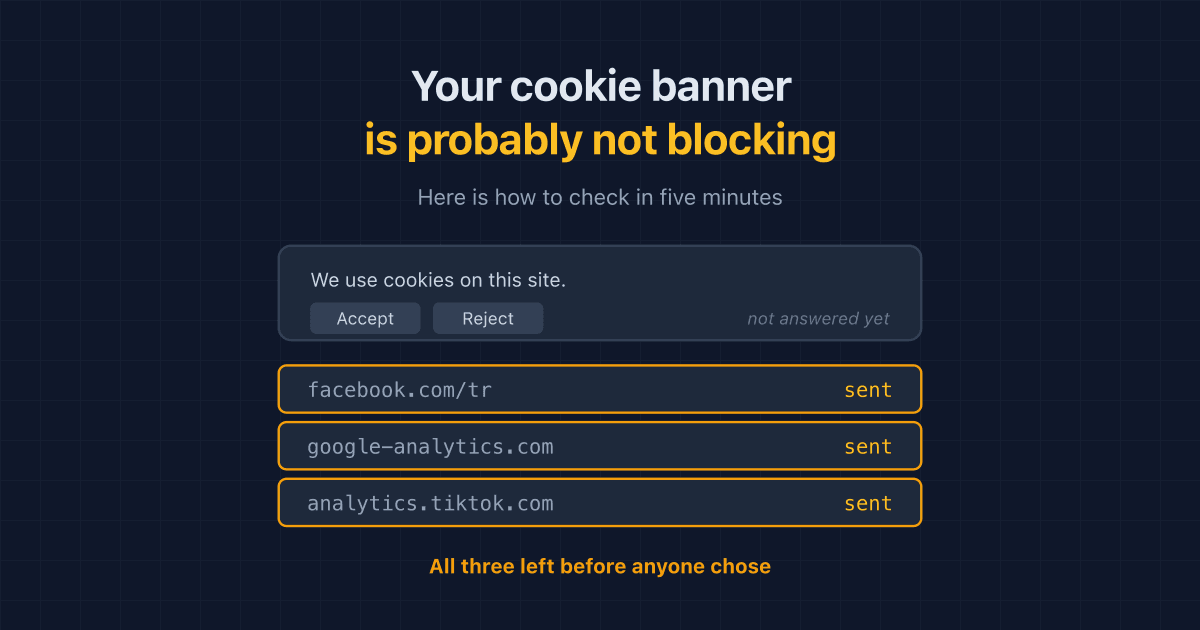
Shopify app pixels and custom pixels send data before a shopper answers your cookie banner, even when permissions look required. How to check, and the hidden fix.
A PCI non-compliance fee is a monthly charge for missing validation paperwork, not a fine. Here is what triggers it, what it costs, and the five steps that stop it.
Card-present and card-not-present transactions fall under different PCI rules. If you sell both online and in person, here's what changes: SAQ type, network segmentation, physical device inspection, and who handles what.
A CVSS 9.8 backdoor in a plugin with 200,000+ installs showed what happens when AI-generated code ships without security review. Here's what WooCommerce store owners need to know.
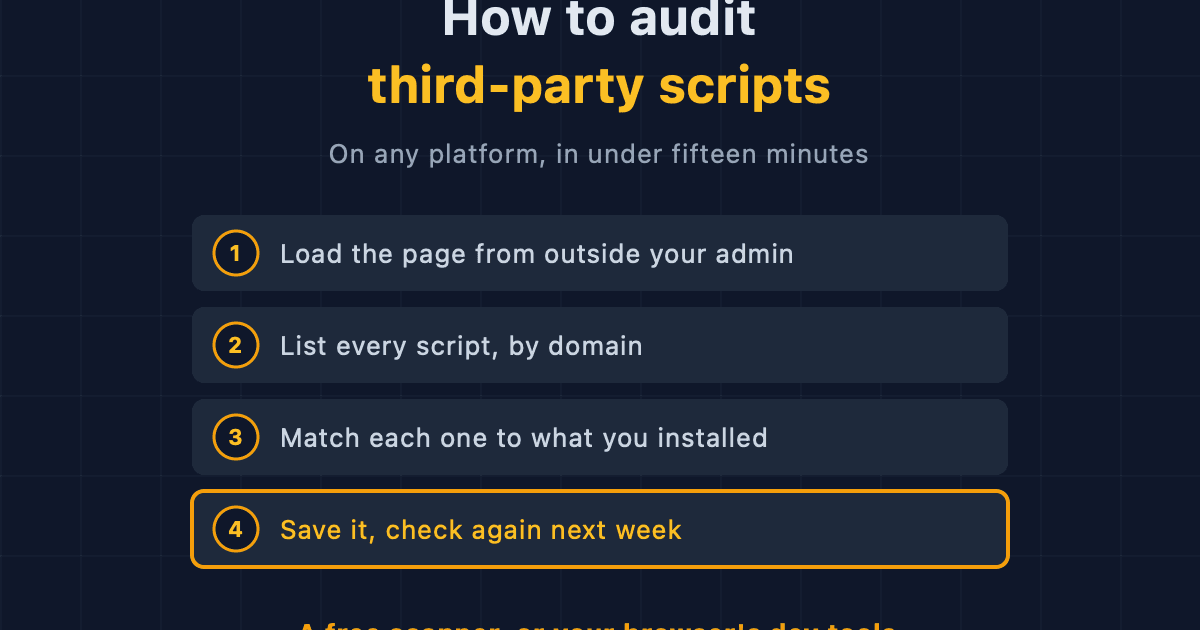
WordPress has no screen listing the scripts on your checkout. Here's how to get a script inventory, what PCI 6.4.3 asks for, and a free plugin that does it.
Agentjacking hijacks AI agents through data they already trust. Here's the June 2026 research, why it reaches your checkout from two directions, and what to do.
AI tools let scammers copy your entire online store in minutes. Here's how to find a fake store using your brand, get it taken down, and make your real store harder to impersonate.
AI made attacks on online stores cheaper to run and harder to spot. Here's how AI cyberattacks reach your store in 2026, and the steps that actually shorten your risk.
Modern card skimmers use AI to mutate their code and impersonate legitimate plugins. Here's how they hide on WooCommerce checkouts, and what store owners can do to find them.
A rogue AI's break-in at Hugging Face traced back to a setup mistake and trusted third-party software. Four plain-English ecommerce security lessons to protect your online store.
A failed ASV scan is common and fixable. Here is a calm, step-by-step recovery plan: what a failing result means, what to fix first, and how to rescan to a pass.
A failing ASV scan report is dense, technical, and easy to misread. Here's how to work through it: what CVSS scores actually mean for your compliance deadline, which findings you must fix, which you can dispute, and how to get to a passing scan as quickly as possible.
Not every finding on a failing ASV scan report is something you caused or can fix. When a vulnerability is misidentified, doesn't apply to your environment, or is mitigated by something the scanner can't see, you can formally dispute it. Here's how the process works and what evidence you need.
A supply chain attack compromises software or services that you depend on, so attackers reach you through a vendor you already trust. Here's how it works, why it's behind many of the biggest breaches, and what ecommerce merchants can do about it.
Card skimming installs hidden hardware on payment terminals to steal card details the moment a card is swiped or inserted. Here's how it works, where it happens most, and what it means for online merchants dealing with the resulting fraud.
Magecart attacks quietly steal your customers' card numbers as they type. Here's how they work, why they hit small stores just as often as big ones, and what you can do about it.
Clickjacking hides a real page underneath a fake one so users click something without realising it. Here's how it works, why it matters for ecommerce stores, and the one-line fix that stops it.
Many Shopify and Stripe merchants believe SAQ A means no vulnerability scanning. Under PCI DSS v4.x that is no longer true. Requirement 11.3.2 now requires quarterly ASV scans for SAQ A merchants, here's why, and what to do about it.
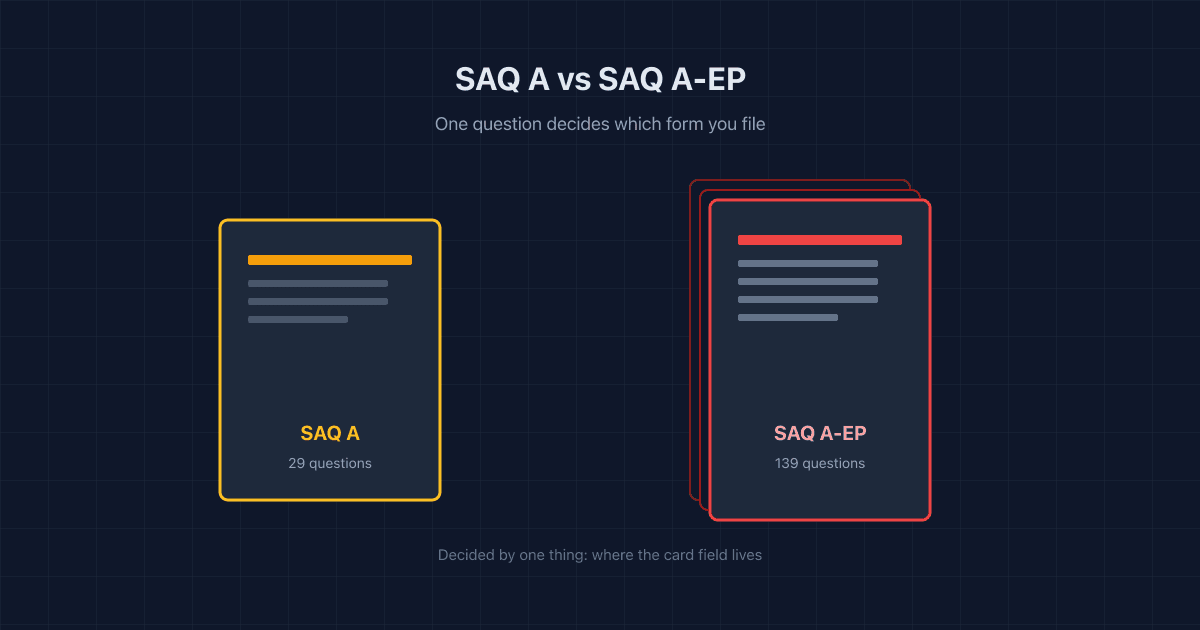
PCI DSS v4.0.1 Requirements 6.4.3 and 11.6.1 are mandatory for SAQ A-EP and SAQ D merchants, and were removed from SAQ A in January 2025. Here's what they ask for and what to do about it.
PCI compliance guides and ecommerce threat intelligence, straight to your inbox.
No spam, unsubscribe anytime. We handle your address as described in our privacy policy.